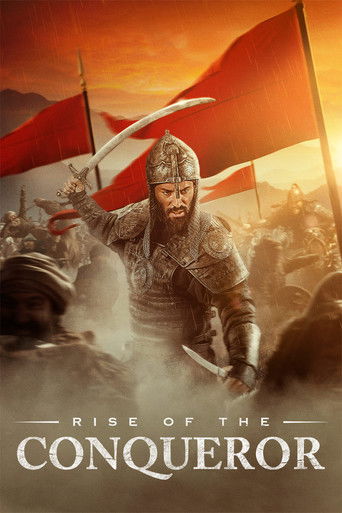
Rise of the Conqueror (2026)
"His legacy will be written in fire and blood."
Where to Watch
Not currently available on any tracked streaming platform. Check back soon.
Overview
Look, I’ve seen my share of historical epics that try to be the next Gladiator, but few actually lean into the sheer, uncompromising grit of the Middle Ages like this one. Rise of the Conqueror 2026 isn’t just another sword-and-sandals flick; it’s a dusty, blood-soaked look at a man who decided that being an exile wasn’t his final chapter.
Rise of the Conqueror — Full Movie Overview
The year is 1370, and the world is basically falling apart. The Silk Road, once the pulsing vein of global trade, has become a fractured mess of warring tribes and greedy warlords. Here’s the thing: into this chaos steps Timur. When we first meet him, he’s a man with nothing—stripped of his status and forced into the shadows. But he isn’t the type to just fade away.
The movie paints a picture of a Central Asia that feels lived-in and dangerous. You can almost feel the grit in your teeth as the camera sweeps across the harsh landscapes of modern-day Afghanistan and Iran. It’s a world where a wrong word gets you killed and a right move makes you a king. Director Jacob Schwarz captures a mood that is perpetually tense, moving from quiet, desperate moments in the wilderness to the deafening roar of a battlefield. It isn’t a “pretty” movie by any means. It’s dark, heavy, and smells of smoke and leather. If you decide to watch Rise of the Conqueror, be prepared for a story that doesn’t pull its punches about how empires are actually built.
What Makes Rise of the Conqueror Worth Watching
I think the real draw here is the tactical side of the warfare. Most movies just show two lines of guys running at each other until everyone is dead. But this film actually lets us see why Timur was a genius. There’s a specific siege sequence midway through the film that is just incredible. Instead of just showing the carnage, the camera follows the scouts and the engineers, showing how Timur uses the environment to turn a losing hand into a total rout.
The visual approach is also worth a mention. Schwarz uses a desaturated color palette that makes the splashes of red—whether it’s a royal banner or, well, blood—really pop against the beige of the desert. And while the pacing hits a few speed bumps in the second act when the politics get a bit dense, the sheer scale of the production keeps you locked in. It’s about the psychology of power and the cost of being “undefeated.”
Cast & Performances
Christian Mortensen plays Timur with a quiet, simmering intensity that honestly surprised me. He doesn’t do a lot of grand speeches. Instead, he uses his eyes to show the calculation happening behind the scenes. It’s a huge shift from his more polished roles in the past.
Then you have Mahesh Jadu and Sayed Badreya, who provide the grounded emotional weight the movie needs so it doesn’t just feel like a history lesson. Joshua Jo is also a standout, bringing a certain kinetic energy to the fight choreography. But for me, Yulduz Rajabova steals the show. She brings a layer of steel to her role that matches Timur’s own ambition, proving that the women in this world were just as much players in the game of thrones as the men with the swords.
Final Verdict
So, is it worth your time? If you’re a history buff or someone who loves a tactical war movie, absolutely. It’s more of a gritty character study than a lighthearted popcorn flick. It’s the kind of movie you put on when you want to feel the weight of history. But if you’re looking for a feel-good hero’s journey, you might want to look elsewhere. This is a story about a brutal man doing brutal things to build a legacy that was written in fire. It’s heavy, it’s violent, and it’s undeniably impressive.