For All Mankind
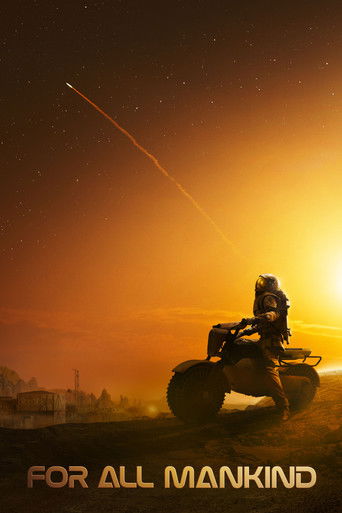
The moon landing of 1969 is often cited as the pinnacle of human achievement, a moment where the world stood still. But what if that victory wasn't ours? What if the Soviet Union touched the lunar surface first, and instead of the Space Race winding down, it ignited into an eternal, high-stakes marathon? This is the electrifying premise of For All Mankind, a sprawling generational saga that reimagines the last half-century as a relentless pursuit of the stars. For All Mankind — Complete Series Overview Created by Matt Wolpert alongside Ben Nedivi and Ronald D. Moore, For All Mankind is far more than a simple "what if" scenario. It is a meticulously crafted alternate history that begins with a bruised NASA psyche and evolves into a visionary look at a future that could have been. The series operates on a unique chronological scale, with each season jumping forward approximately a decade. This allows viewers to witness the ripple effects of a sustained space program: from the establishment of permanent lunar bases in the 1970s and 80s to the cutthroat race for Mars and the commercialization of the asteroid belt. The tone is a masterful blend of aspirational futurism and gritty realism. While the technology accelerates—leading to early electric cars and clean fusion energy—the human cost remains heavy. We follow the lives of astronauts, engineers, and their families as they navigate the personal wreckage that comes with being a pioneer. It is a show where the silence of a vacuum is just as loud as the roar of a Saturn V rocket, and where the geopolitical chess matches played in mission control are as deadly as the solar flares in deep space. Why For All Mankind Has Captivated Audiences The series has earned its "prestige TV" stripes by refusing to take the easy path. Its primary appeal lies in its "butterfly effect" storytelling; small changes in the 1960s lead to a radically different 21st century, making the world feel both familiar and tantalizingly alien. The production values are nothing short of cinematic, offering some of the most scientifically grounded and visually stunning depictions of space travel ever put to film. Beyond the hardware, the show’s cultural impact stems from its inclusivity. In this timeline, the need to beat the Soviets forces NASA to fast-track social progress, putting women and people of color in the cockpit decades earlier than in our reality. This creates a rich tapestry of character development where personal growth is inextricably linked to the survival of the species. It’s a series that captures the collective awe of looking at the horizon while never losing sight of the fragile hearts inside the spacesuits. Standout Performances The ensemble cast of For All Mankind delivers a masterclass in aging and evolution. Edi Gathegi is magnetic as Dev Ayesa, a charismatic and polarizing tech visionary who disrupts the government-led status quo with private enterprise. Coral Peña provides the series with its intellectual and emotional backbone as Aleida Rosales, transitioning from a brilliant, troubled youth to a powerhouse at NASA. Cynthy Wu’s portrayal of Kelly Baldwin offers a poignant look at the "space legacy" child, balancing a hunger for discovery with a heavy family name. The addition of heavyweights like Toby Kebbell and Mireille Enos in later arcs ensures the series maintains its high-octane dramatic tension, bringing fresh, visceral energy to an already formidable lineup. Should You Watch For All Mankind? If you crave storytelling that respects your intelligence and rewards your patience, For All Mankind is essential viewing. It is the perfect choice for fans of "hard" science fiction, political thrillers, and sweeping family dramas. Expect a slow-burn narrative that builds into heart-stopping, white-knuckle finales. It is a soaring tribute to human ambition—reminding us that while the fight for freedom lies beyond the stars, the soul of the journey remains right here on Earth.