Where to Watch
Not currently available on any tracked streaming platform.
Overview
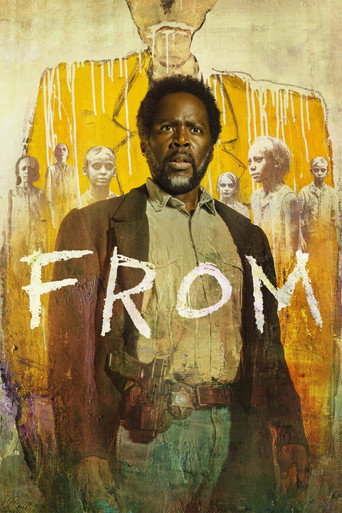
FROM — Quick Overview
There is a specific, visceral kind of dread that comes with realizing the road ahead of you only leads back to where you started. This is the central, suffocating reality of FROM, a series that has quietly become one of the most gripping entries in the modern mystery-horror landscape. With a staggering 8.3/10 score on TMDB, the show has clearly struck a chord with audiences who crave high-stakes storytelling that refuses to provide easy answers. It is a narrative built on the foundation of a simple, terrifying premise: what happens when a location becomes a predator?
Created by John Griffin, the series introduces us to a nightmarish town in middle America that functions as a supernatural trap. Once you drive in, you are part of the collective, whether you like it or not. The show doesn’t just rely on the physical danger of its setting; it leans heavily into the psychological toll of being an “unwilling resident.” Across its four seasons, the series has maintained a status as a returning favorite, proving that its central mystery is deep enough to sustain long-term investment without losing its edge. It is a masterclass in building a sense of place where the environment itself feels like it is watching the characters, waiting for a single moment of weakness.
Premise and Storytelling
The narrative engine of FROM is fueled by the duality of survival. During the daylight hours, the residents are engaged in a desperate, often heartbreaking struggle to maintain a sense of normalcy. They attempt to build a society, to govern themselves, and to find a way out of a town that seems to defy the laws of geography. This search for an exit is the heartbeat of the show, driving the characters to explore the boundaries of their prison, even when the forest suggests that some boundaries are better left uncrossed. The drama is grounded in the human condition—how we react when our freedom is stripped away and replaced by a permanent state of uncertainty.
However, when the sun goes down, the tone shifts from a tense drama into a harrowing survival horror. The surrounding forest is not merely a collection of trees; it is the source of terrifying creatures that emerge under the cover of darkness. These threats force the characters into a nightly ritual of defense, where the stakes are quite literally life or death. The storytelling expertly balances these two modes, using the Sci-Fi & Fantasy elements to heighten the emotional weight of the Drama. The mystery of why the town traps people and what the creatures truly want creates a constant “puzzle-box” atmosphere that keeps viewers theorizing long after the credits roll.
What makes the storytelling particularly effective is the focus on the forest itself. It is presented as a looming, sentient threat that harbors more than just creatures. There is a sense that the town and the woods are part of a larger, darker ecosystem that the residents are only beginning to understand. By focusing on the residents’ fight to keep their humanity intact while facing inhuman threats, the show creates a narrative tension that is both external and internal. You aren’t just watching people run from monsters; you are watching them try to keep from losing their minds in a world that no longer makes sense.
Cast and Production
The ensemble cast is led by the formidable Harold Perrineau, who brings a necessary gravity and weariness to the screen. His performance anchors the show, providing a window into the exhaustion of leadership in an impossible situation. Alongside him, Catalina Sandino Moreno, Ricky He, David Alpay, and Hannah Cheramy deliver nuanced performances that help flesh out the community. Each character represents a different reaction to the trauma of being trapped—some are driven by hope, others by scientific curiosity, and some by a crushing sense of resignation. The chemistry between the cast members makes the “normalcy” they strive for feel earned and fragile.
From a production standpoint, the creative vision of John Griffin is evident in the show’s atmospheric consistency. The town feels lived-in and decaying, a perfect visual metaphor for the residents’ situation. The use of the forest as a primary antagonist is handled with great care, utilizing sound design and lighting to make the environment feel claustrophobic despite being outdoors. The creature design and the way the threats are teased out ensure that the horror elements never feel cheap; instead, they feel like an inevitable consequence of the town’s existence. The high production value supports the ambitious Sci-Fi & Fantasy world-building, making the impossible feel terrifyingly real.
Should You Watch FROM?
If you are a fan of stories that prioritize atmosphere and deep-seated mystery, then FROM is an essential addition to your watchlist. It is a show designed for the “theorist” viewer—someone who enjoys picking apart clues and trying to map out the rules of a supernatural world. The 8.3/10 rating is a testament to its quality, reflecting a show that respects its audience’s intelligence while never shying away from the visceral thrills of the horror genre. It manages to be both a character-driven drama and a high-concept mystery, a rare feat that keeps the narrative fresh even as the seasons progress.
Ultimately, the show is a recommendation for anyone who enjoys the feeling of being completely immersed in a world where the rules have changed. It is a haunting exploration of isolation, community, and the lengths people will go to for a chance to return home. Whether you are in it for the terrifying creatures that come out at night or the complex interpersonal dynamics of the trapped residents, this series delivers on every front. Just be prepared: once you enter the world of this nightmarish town, you might find it just as hard to leave as the characters themselves.