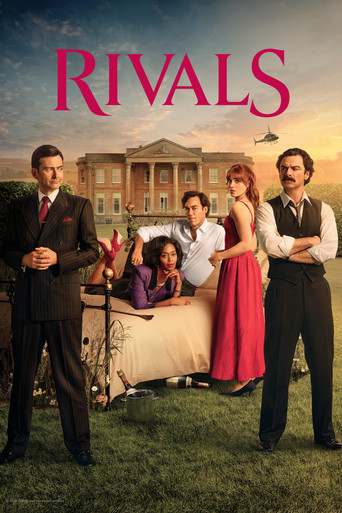
Where to Watch
Not currently available on any tracked streaming platform.
Overview
Rivals — Quick Overview
If you have ever wondered what happens when the unbridled ambition of the 1980s meets the high-stakes pressure of the broadcast industry, Rivals is the answer you have been looking for. Set in 1986, a period when Britain was experiencing a massive economic and cultural boom, the series serves as a time capsule of an era defined by excess. It is not just about the money, though there is plenty of that changing hands; it is about the specific, cutthroat energy of a television world where the stakes feel like life and death. The show manages to capture a very particular vibe where the aesthetic is as loud as the personalities, and the quest for dominance is the only thing that matters.
With a current TMDB score of 7.2/10, the show has clearly struck a chord with viewers who enjoy a bit of friction in their drama. As a returning series that already boasts two seasons, it offers a substantial amount of story to sink your teeth into. Rivals does not shy away from the messy reality of its characters’ lives, presenting a world where the line between professional success and personal indulgence is almost non-existent. It is a show that understands the allure of power and the lengths people will go to keep it, all while wrapped in the neon-tinted, big-haired glory of the mid-eighties.
Premise and Storytelling
The narrative engine of Rivals is fueled by the intense competition within the British television landscape of 1986. This was a time when TV was the ultimate medium, and the people running the show were treated like royalty—or villains, depending on who you asked. The storytelling dives headfirst into this environment, showing us that the real drama often happens when the cameras are turned off. The overview makes it clear that deals are brokered in boardrooms as well as bedrooms, suggesting a narrative where intimacy is often used as a currency and loyalty is a rare commodity. This creates a friction-filled atmosphere where every conversation feels like a chess move.
One of the most compelling aspects of the story is the central question it poses: in a world where every man and woman is out only for themselves, can true love really blossom? This thematic conflict prevents the show from being just another corporate drama. By juxtaposing the cold, calculating nature of the TV industry with the messy, unpredictable nature of human emotion, the series explores whether ambition and affection can coexist. The “cutthroat” nature of the business means that characters are constantly looking over their shoulders, making the moments of genuine connection feel even more significant—or perhaps even more dangerous.
The pacing reflects the “booming” nature of the decade. There is a sense of urgency in how these characters pursue their goals. Whether they are fighting for a promotion, a prime-time slot, or a romantic conquest, the energy is relentless. Rivals effectively uses its 1986 setting to justify this “bigger is better” mentality. The big hair-dos mentioned in the premise are more than just a fashion choice; they are a metaphor for the inflated egos and outsized dreams of the people inhabiting this world. It is a narrative of high peaks and deep valleys, where the person on top today could be at the bottom by the next commercial break.
Cast and Production
The strength of a drama like this often rests on the shoulders of its ensemble, and Rivals features a powerhouse cast that brings the 1980s back to life with remarkable flair. David Tennant and Alex Hassell lead the charge, providing the gravitas and charisma necessary to anchor a story about power players. Tennant, known for his incredible range, is perfectly suited for a world where appearances are everything, while Hassell brings a screen presence that fits the “big ambitions” of the era. They are joined by Nafessa Williams, Bella Maclean, and Katherine Parkinson, creating a diverse dynamic of characters who all have their own agendas and secrets to protect.
From a production standpoint, the focus on the “big hair-dos” and the specific 1986 setting suggests a creative vision that is deeply invested in period accuracy and style. The show doesn’t just want to tell a story; it wants to immerse you in a specific moment in British history. The production design likely mirrors the “cutthroat” and “booming” themes by showcasing the contrast between the polished, high-tech world of television studios and the more private, often scandalous settings where the real power plays occur. The fact that the series has already secured a second season speaks to the confidence the production team has in this world and these characters.
Should You Watch Rivals?
If you are a fan of dramas that lean into the complexities of human ambition and the “me-first” attitude of the corporate world, then Rivals is a strong recommendation. It is particularly well-suited for those who enjoy period pieces that aren’t just about costumes, but about the specific social and professional pressures of the time. The 7.2 score indicates a high level of quality that satisfies both casual viewers and those looking for something a bit more cynical and biting. It is a show that rewards your attention as you try to figure out who will ultimately come out on top in this game of professional and personal chicken.
Ultimately, Rivals is for anyone who loves a story where the stakes are high and the characters are unapologetically driven. It offers a fascinating look at the television industry during one of its most transformative decades, all while maintaining a focus on the timeless struggle between the desire for power and the need for love. Whether you are here for the 80s nostalgia, the boardroom battles, or the complicated romances, this series delivers a rich, multi-layered experience that keeps you guessing until the very end. With two seasons to dive into, now is the perfect time to see who survives the cutthroat world of 1986 television.