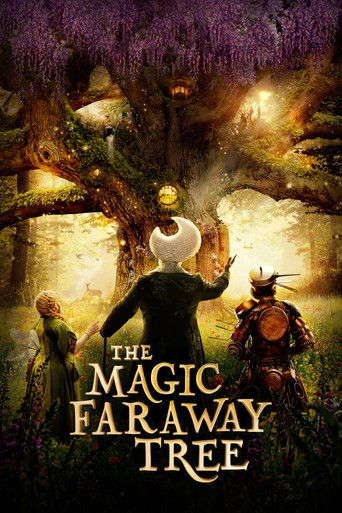
The Magic Faraway Tree (2026)
Where to Watch
Not currently available on any tracked streaming platform. Check back soon.
Overview
The Magic Faraway Tree — Quick Overview
Ben Gregor’s The Magic Faraway Tree arrives as a measured entry into the family adventure genre, balancing the grounded realities of a modern household with the heightened whimsy of a classic discovery narrative. With a runtime of 110 minutes, the film does not overstay its welcome, opting instead for a brisk pace that mirrors the curiosity of its young protagonists. It avoids the frantic energy often found in contemporary children’s cinema, choosing a more atmospheric approach to its world-building and character development.
While the TMDB score of 6.5/10 suggests a production that perhaps prioritizes accessibility over radical innovation, there is a distinct charm in its execution. The film serves as a reminder that the most effective fantasy stories are often those rooted in domestic stakes. By focusing on a family in transition, the narrative provides a relatable emotional anchor for the more surreal elements that follow, making the journey feel purposeful rather than merely decorative.
Story and Script
The narrative framework of The Magic Faraway Tree centers on a modern family’s relocation to the countryside. This move serves as the catalyst for the entire plot, representing a literal and figurative departure from their established lives. The script utilizes this transition to explore themes of isolation and reconnection. When the children discover a magical tree hidden within their new environment, the film shifts from a domestic drama into a structured adventure. This tree is not merely a landmark but a gateway, inhabited by eccentric residents who provide the children with a bridge to various fantastical lands.
The progression of the story relies on the episodic nature of these lands. Each new destination offers a different aesthetic and set of challenges, yet the script maintains a consistent focus on the family’s internal dynamics. The primary objective of these adventures is the rekindling of the family bond. As the characters navigate the oddities of the tree’s inhabitants and the unpredictability of the realms they visit, they are forced to rely on one another in ways their previous modern life did not require. This thematic through-line ensures that the fantasy elements remain subservient to the emotional arc of the family unit.
The tone of the writing appears to favor a blend of wonder and mild peril, suitable for a broad audience. By placing a “modern” family in such an archetypal fantasy setting, the script creates a productive friction. The children’s contemporary sensibilities meet the timeless, eccentric nature of the tree’s residents, leading to a narrative that feels both fresh and nostalgic. The 110-minute duration allows for a sufficient exploration of at least a few distinct lands without thinning the plot, ensuring that the central theme of family unity remains the focal point through to the conclusion.
Cast and Direction
Director Ben Gregor oversees a cast that brings a surprising amount of dramatic weight to a family-oriented project. Andrew Garfield and Claire Foy, as the parents, provide a sophisticated foundation for the story. Their presence suggests a film that takes its emotional beats seriously, likely portraying the “rekindling” of their family bond with a level of nuance that elevates the material. Garfield’s history of playing earnest, physically expressive characters likely complements Foy’s ability to convey internal conflict and maternal resolve, making the parental perspective as engaging as the children’s adventures.
The supporting cast, featuring Nicola Coughlan, Jessica Gunning, and Rebecca Ferguson, is tasked with bringing the “eccentric residents” to life. Coughlan and Gunning are particularly well-suited for roles that require a blend of humor and distinct personality, which is essential for characters living within a magical tree. Rebecca Ferguson adds a layer of gravitas to the ensemble; her involvement often signals a character with significant presence or authority. Gregor’s direction seems focused on harmonizing these varied performances, ensuring that the eccentricities of the magical world do not overshadow the grounded performances of the central family.
Should You Watch The Magic Faraway Tree?
If you are looking for a cohesive family film that values character growth as much as visual variety, The Magic Faraway Tree is a solid choice. It is particularly well-suited for viewers who appreciate the “portal fantasy” subgenre, where the discovery of a hidden world serves as a metaphor for personal or familial healing. Fans of the main cast will find plenty to enjoy here, as the film allows these high-caliber actors to play within a more imaginative and lighthearted space than their typical dramatic fare.
While it may not reinvent the tropes of the adventure genre, the film’s 6.5/10 rating reflects a reliable and competent piece of storytelling. It is an ideal selection for a weekend viewing where the goal is to find a story that appeals to multiple generations. Those who enjoy narratives about families finding their way back to each other through extraordinary circumstances will find The Magic Faraway Tree to be a rewarding and thoughtful experience. It successfully captures the essence of discovery, making the countryside feel just as vast and mysterious as the fantastical lands at the top of the tree.