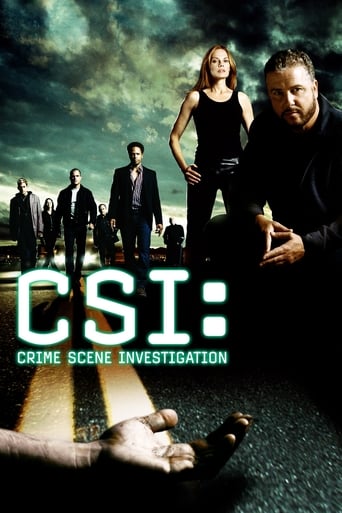
CSI: Crime Scene Investigation (2000)
Where to Watch
Not currently available on any tracked streaming platform.
Overview
Before the explosion of modern true-crime podcasts and the gritty realism of prestige cable dramas, one show redefined the television landscape by turning the microscope on the macabre. CSI: Crime Scene Investigation, which premiered in 2000, didn’t just follow the footsteps of the detectives; it followed the trail of the blood spatter, the trajectory of the bullet, and the silent testimony of a single strand of hair. Set against the neon-soaked, high-stakes backdrop of Las Vegas, the series invited viewers into the world of the “night shift”—a dedicated team of forensic scientists who believed that while people lie, the evidence never does.
CSI: Crime Scene Investigation — Complete Series Overview
Spanning an impressive 15 seasons, CSI: Crime Scene Investigation is the definitive procedural that transformed forensic science into a global phenomenon. Created by Anthony E. Zuiker, the show moves away from traditional “whodunit” tropes to focus on the “how-dunit.” The series centers on the Las Vegas Police Department’s Criminalistics Bureau, where investigators use cutting-edge technology and old-fashioned intuition to piece together the puzzles left behind at crime scenes.The tone is a masterclass in atmospheric tension, blending the clinical coldness of a laboratory with the visceral, often dark reality of the Mojave Desert’s criminal underbelly. Whether it’s a high-roller murder in a penthouse suite or a body found buried in the sand, the show maintains a fast-paced, intellectual rhythm. It’s a world where the tiniest fleck of paint can be the difference between a conviction and a killer walking free. The series excels at making the viewer feel like an active participant in the investigation, turning every episode into a high-stakes scavenger hunt for justice.
Why CSI: Crime Scene Investigation Has Captivated Audiences
The enduring appeal of CSI lies in its revolutionary production values and its “puzzle-piece” storytelling. It pioneered the “CSI shot”—a stylized, hyper-realistic CGI journey through the human body or inside a mechanical device—which made the science feel cinematic and urgent. Beyond the gadgets and the gore, the show captured the public imagination by validating the power of objective truth in an uncertain world.The cultural impact was so profound that it birthed the “CSI Effect,” influencing how real-world juries perceived forensic evidence. Audiences were drawn to the procedural comfort of a solved mystery, yet the show frequently challenged its own formula with complex, multi-episode arcs involving elusive serial killers. It balanced the “case of the week” format with deep, slow-burn character development, making the sterile environment of a crime lab feel like home for millions of viewers for over a decade.