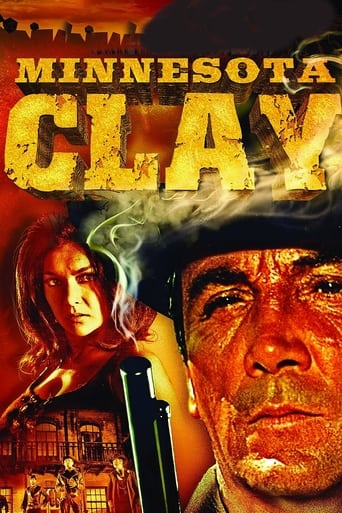
Minnesota Clay (1964)
"A sightless gunman... on a manhunt!"
Where to Watch
Not currently available on any tracked streaming platform. Check back soon.
Overview
Before Sergio Corbucci changed the face of the genre with the mud-soaked violence of Django, he gave us a fascinating, high-concept gunslinger story that often gets overlooked. Look, the 1960s were a wild time for Westerns, and this 1964 gem is where the transition from classic heroism to gritty realism really starts to take shape.
Minnesota Clay — Full Movie Overview
Imagine being the fastest draw in the territory, but your greatest enemy isn’t a rival outlaw—it’s your own body. That’s the hook that keeps Minnesota Clay 1964 feeling fresh decades later. We meet Clay as he’s rotting away in a forced labor camp for a crime he didn’t commit. He eventually stages a daring escape, but he isn’t just looking for a cold beer and a soft bed. He’s out for blood. The man who could have cleared his name at the trial, a snake named Fox, chose to keep his mouth shut, and Clay isn’t the type to forgive and forget.
But here’s the thing that sets the stakes: Clay is slowly going blind. The doctor warns him that every time he pulls the trigger, the strain brings him closer to total darkness. It creates this thick, claustrophobic atmosphere that you don’t usually find in wide-open Westerns. You aren’t just watching a revenge story; you’re watching a man try to finish his business before his world turns into a blurry mess of shadows. If you decide to watch Minnesota Clay, expect a mood that’s heavy on tension and short on mercy. It’s a dusty, desperate journey that feels like a bridge between the old Hollywood style and the cynical, sun-drenched nightmares that would soon define the Italian Western.
What Makes Minnesota Clay Worth Watching
The real draw here is how Corbucci handles the handicap. Usually, Western heroes are invincible gods who never miss a shot. But Clay has to rely on his ears and his instincts. There’s a standout sequence toward the end where the sound design becomes the main character. Every creak of a floorboard, every jingle of a spur, and the whistling wind all become life-or-death clues. It makes the shootouts feel more like a high-stakes game of hide-and-seek than a standard duel. I think the visual approach is surprisingly vibrant, too. Instead of the washed-out sepia tones we often see, there